

I have returned to work after an unplanned excursion into the Australian health care system, including open-heart surgery.
My general practitioner (GP) was concerned about my cholesterol1 levels, particularly given my family history. He had prescribed statins. With more than 1/4 of adults in my age group on statins, this was not uncommon.
Statins did not go well. I am apparently statin-intolerant.2 They made me feel like I had a constant fever: muscle aches, tired, and what I imagine being 20 years older feels like, what the doctor called myalgia. We tried another statin to no avail.
So, rather than continuing to speculate about how much of a problem my cholesterol actually was, my GP sent me for a CT scan3 to look for calcification in the coronary arteries.
The result on that front was mild calcification on left anterior descending (calcium score of 50) (65th percentile).4 So the cholesterol level was not a major problem, all things considered.
The scan did, however, find something else.
There’s a little black spot on my heart today
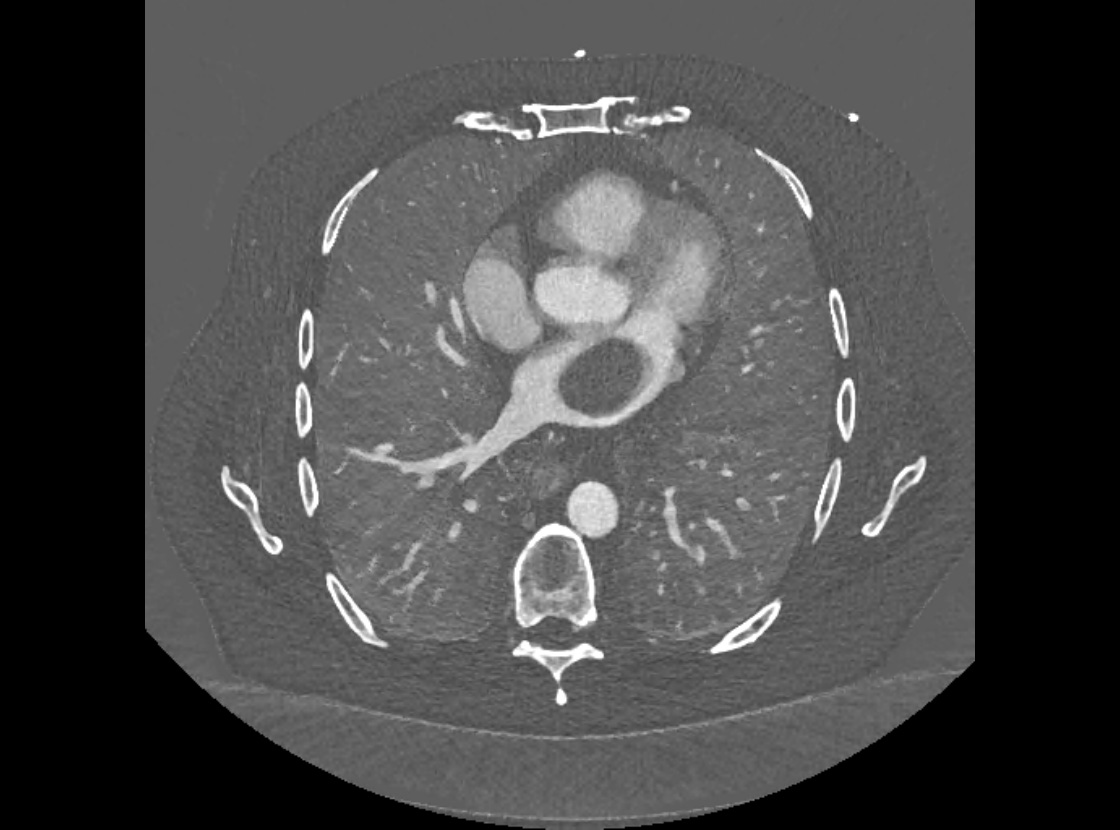
The CT showed a suspected cardiac myxoma in my left atrium.
What’s a cardiac myxoma?5
It is a rare,6 usually benign tumour that grows inside the heart. “Benign” is doing a fair bit of work in that sentence. It means the tumour isn’t cancerous. It does not mean that having a large tumour floating around inside your heart is a good idea, or even not harmful.
An echocardiogram corroborated.
Mine was initially estimated at about 50 mm across and occupied a substantial fraction of my left atrium. This provides definitive evidence that I do, in fact, have a heart. It also suggests that mine is considerably more efficient than everyone else’s, given how well it had been doing its job while being starved of space.
The problem with a myxoma is not simply that it takes up space. If it gets large enough, it can obstruct blood flow through the atrial valve. Also, they are “friable,” meaning bits can break off, enter the bloodstream, and go places where bits of heart tumour really ought not go.
In retrospect, it also provided an explanation for health problems I had been experiencing that nobody had previously connected to my heart. My doctor had not been looking for a myxoma. There was no particular reason he should have been, given their rarity.
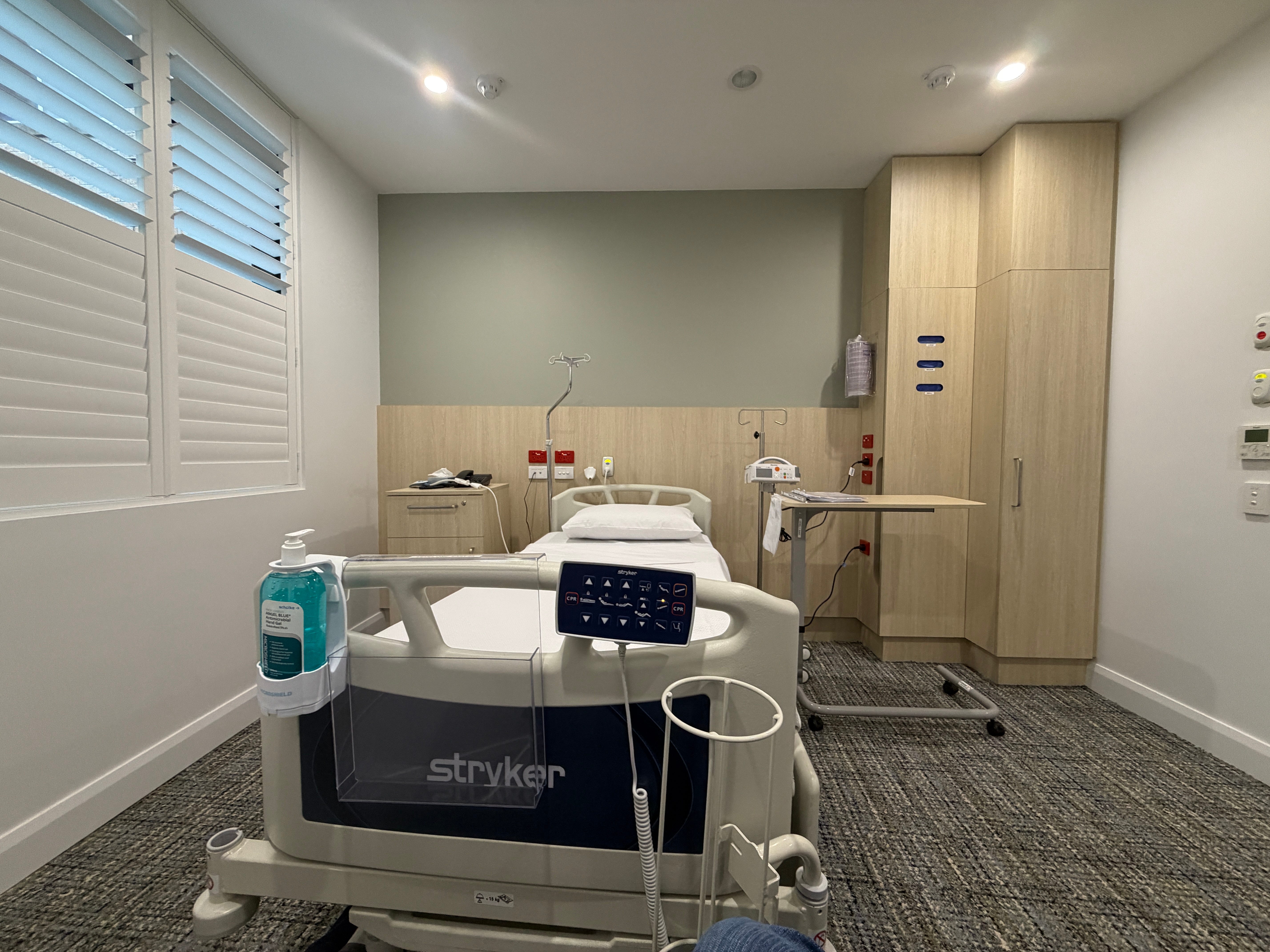
One week after it was discovered, I was in Strathfield Private Hospital having open-heart surgery to remove it.
Everybody has an open heart
I had never had major surgery before. I also don’t think I have taken a real sick day in my academic career. I have taught through pneumonia and through laryngitis, although I ended a class early that day.7
Open-heart surgery is another matter though.
Among the instructions on leaving hospital was that I would not be able to drive a car for several weeks. Ha. I also did not, however, ride a bicycle to or from the hospital.
My myxoma
The tumour was successfully removed from my left atrium. It was as expected a myxoma and benign, but after extraction measured at roughly 70 mm, confirming that removing it was the right strategy. The surgery involved stopping my heart and lungs, so I was kept alive by machines in the interim. I of course only know this because I was told, having been unconscious through the experience. Technically they opened me up twice, since there was still internal bleeding after they closed me the first time. Lovely.
Recovery from having one’s chest opened is not instantaneous. The first week in hospital was miserable, both because of the surgery and the tubes and because of being in hospital with all the machines that go ping. Walking, breathing, sleeping, coughing, and figuring out how to get out of a chair became more challenging than I remembered.
But the operation went well, the myxoma is gone, I have spent a month recovering (and will spend at least another two months they tell me, but I am fine to do anything not involving heavy lifting) and I am back at on campus facing a month of computer software needing updates which for whatever reason they need to waste my time for instead of doing when I wasn’t here for a month, with the computer on.
Causal Chain
The chain of causation here.
My cholesterol was moderately high.
My GP worried about it.
I couldn’t tolerate the obvious treatment.
That led to further investigation.
The investigation showed that the cholesterol was not, in fact, doing very much damage.
And in establishing that, the scan happened to find a large tumour in my heart before it could cause a stroke, obstruct blood flow, or do something else unpleasant.
So my borderline high cholesterol may have saved my life.
My thanks to my GP for following up something that would have been easy to dismiss, and to the cardiologists, surgeons, nurses, physiotherapists, and other staff who diagnosed the problem, got me through surgery, and put me back together at Strathfield Private Hospital, and the cardio-physio group at St. George’s Hospital. Also thanks to the health care system in Australia, I am out-of-pocket well less than $AU10k for the whole thing. Also thanks to family and colleagues for picking up the slack.
AI tells me “High cholesterol is bad because it can lead to plaque building up in your arteries, which can narrow or clog them and reduce blood flow to your heart and other organs.”
I suspect strongly that Big Statin is trying to cover up the incidence of statin intolerance. But maybe I am just lucky.
I describe the CT scan as the worst amusement park ride ever. You lie on your back and they move you backwards and forwards while scanning you. Not painful (and not as claustrophobic as an MRI).
Calcium score of 50, consistent with mild 10-year estimated CVD risk. The burden of non-calcified plaque is estimated at 50% total plaque volume.
There is also a Myxoma virus which gives Myxomatosis (tumors) to rabbits and is used for control. This is not that.
It is estimated that fewer than 1 in a million people per year have surgery to remove a cardiac myxoma annually in Australia. I am even more lucky.
Sure, I sometimes worked from home before COVID, back when doing so was less common, if going to campus wasn’t worth the trip. But much of my work involves a computer, and it isn’t as though the computer goes unvisited on weekends.
Academics are nominally paid according to days and hours. I regard that as a legacy of archaic work rules imposed by the backwards labour arrangements of a university system in which both labour and management seem adamant to retain the assembly-line model of production.
I regard myself as a professional. I work for outputs rather than inputs, and hope to be assessed that way as well. If I can produce the same output with fewer inputs, that should be regarded as an improvement in productivity, not evidence that somebody has failed to extract enough hours from me or enough dollars from funders, academia is irretrievably broken and there is a long chain of university administrators who bear responsibility.
FIN