

Below summarises my presentation at a Forum on Vehicle-Generated Noise Pollution at New South Wales Parliament House on September 23.
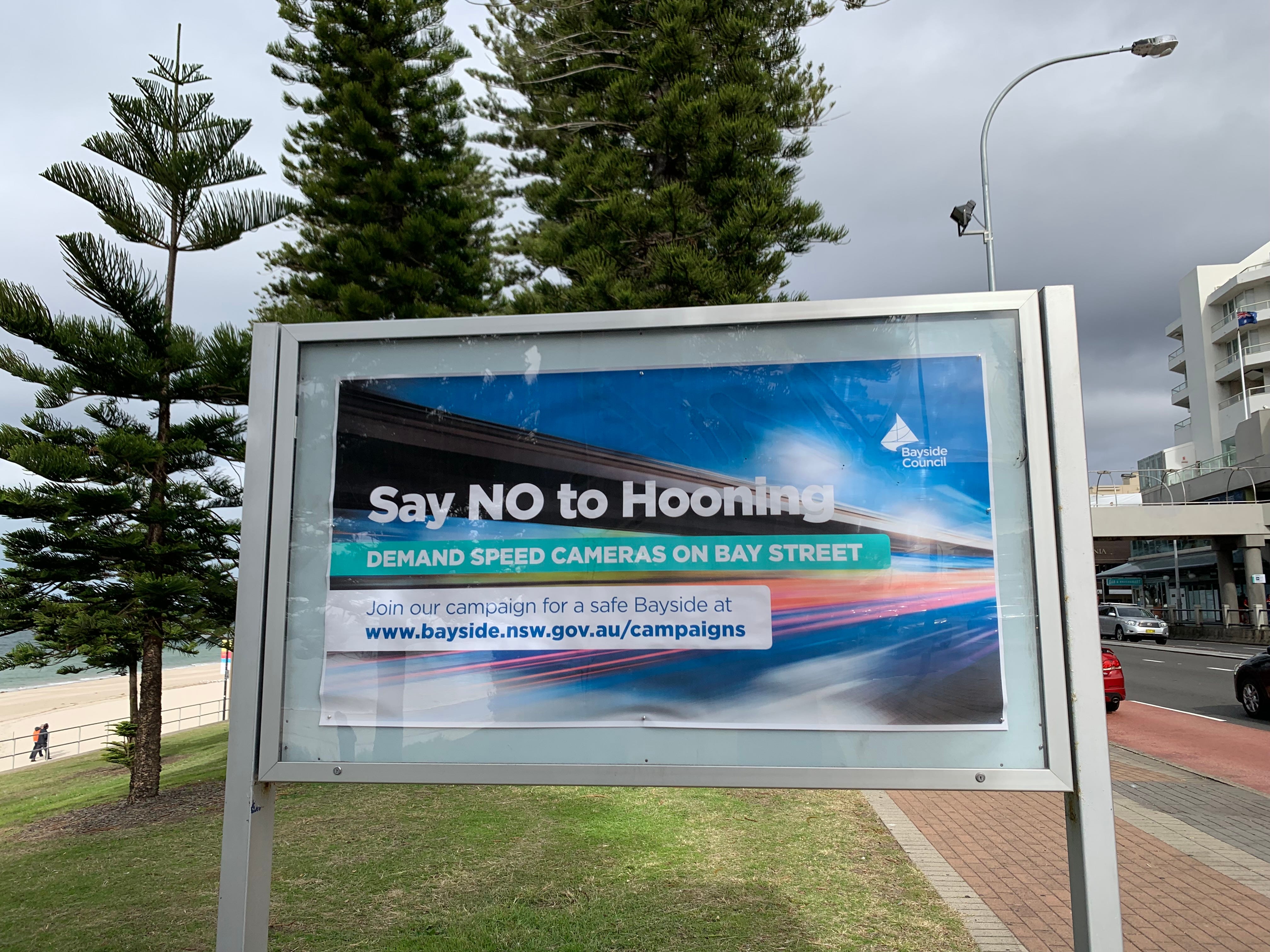
For my international readers, while noise is an issue in many places, in Australia this is an issue because of the popularity of hooning, anti-social operation of vehicles, especially noisy driving (modified engines, tyre burnouts (spinning the driven wheels while holding the car still), etc.) Wikipedia reports:
A hoon (/huːn/ ⓘ) is an Australian and New Zealand term describing a person who deliberately drives a vehicle in a reckless or dangerous manner, generally in order to provoke a reaction from onlookers.
Decibels
If a tree falls in the forest and there is no-one there to hear it, does it make a sound? Of course.
But does it make a noise? No.
Noise is unwanted sound. It is a negative externality; it requires both someone making the noise and someone hearing it without wanting to.
What matters to the person trying to sleep is how loud each event is and how many events there are.
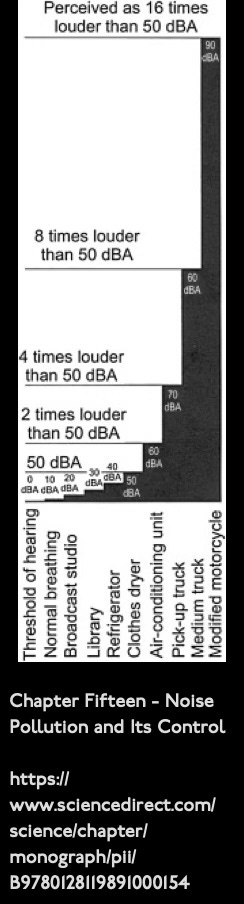
In contrast with intuition, decibels are logarithmic. One truck may be 80 dB, but two trucks are “only” 83 dB. Ten decibels more sounds about twice as loud, so a modified motorcycle at 90 dBA is heard as sixteen times louder than a 50 dBA street.
A quiet street with one loud vehicle is worse than a busy one with a steady stream of vehicles. The background is low and every pass stands out.
Money
We have heard from my colleague Edmund Lau at the University of Sydney about the health effects of poor sleep, resulting from noise.
But everything in Australia is about real estate. Hedonic studies of real estate prices near highways and airports give us a Noise Depreciation Index. Each additional decibel lowers the price of a house by about 0.62%. People don’t want to live near highways or under flight paths, and require a lower price to do so.
Roads that invite it
Some roads invite anti-social driving: long straight sections with clear sightlines, capacity to spare at night, connected loops that let a driver circulate and repeat the performance. Hard reflective surfaces, façades close to the carriageway, and light background traffic amplify the noise.
Re-design
Design works every hour on every driver. Geometry that enforces itself changes what speed feels natural, and it narrows the whole speed distribution, including the fast tail that does the damage. Design changes may comprise various sorts of traffic calming (but not all of them), including interventions like planting trees on the side of the road, to slow traffic.
Isolated humps and stop signs produce the noisiest pattern available. Brake, sprint to the next device, brake again. The braking, the suspension and the re-acceleration all make noise.
Continuous low-speed geometry is quieter: close-spaced plateaus, raised intersections, and small roundabouts, along with traffic signals timed to give a green wave at the target speed rather than a clear run. Diverters cut flows and speeds together.
Lower speeds also lower the level. Zurich dropped limits from 50 to 30 km/h and measured about 1.6 to 1.7 dB less at building façades, with less annoyance and less disturbed sleep reported.
Re-surface
Transport for NSW notes that against dense-graded asphalt: new open-graded asphalt −2 dBA, stone mastic asphalt −1, 7 mm chip seal +2, 14 mm chip seal +4. Road pavement gets resurfaced on a cycle, we might as well put down quieter pavements when we can.
Enforce
Enforcement is our go-to policy, and we cannot abandon it. It is necessary for modified exhausts, organised racing and repeat offenders, and cameras and patrols can follow the problem as it moves. But we must also recognise it is selective by nature. And it addresses the problem that previous bad designs have created, and hopefully future good designs will prevent.
What Parliament can do
Three things, none of which requires another study.
Redesign. Self-enforcing 30 km/h design at noise hotspots, and on new residential, school and shopping streets. Fund calming along whole corridors, not single blocks.
Resurface. Fund low-noise surfaces, and specify them where people live.
Enforce. Objective noise limits that can be measured at the roadside, backed by cameras, patrols and inspections aimed at modified exhausts, organised racing and repeat offenders.
All of which is to say: enforcement catches the offender, design removes the opportunity.
FIN
Notes
Electric vehicles
Electric propulsion is quieter, and below about 30 km/h that is most of the sound. Above it, tyre-road noise dominates and an electric car sounds like any other.