Recently published:
Song, C., Levinson, D. and Moylan, E. (2026) A simulation-based policy evaluation of healthcare access using heterogeneous emergency medical services vehicles and incidents. Transport Policy, Volume 187, October 2026, 104293. [doi]
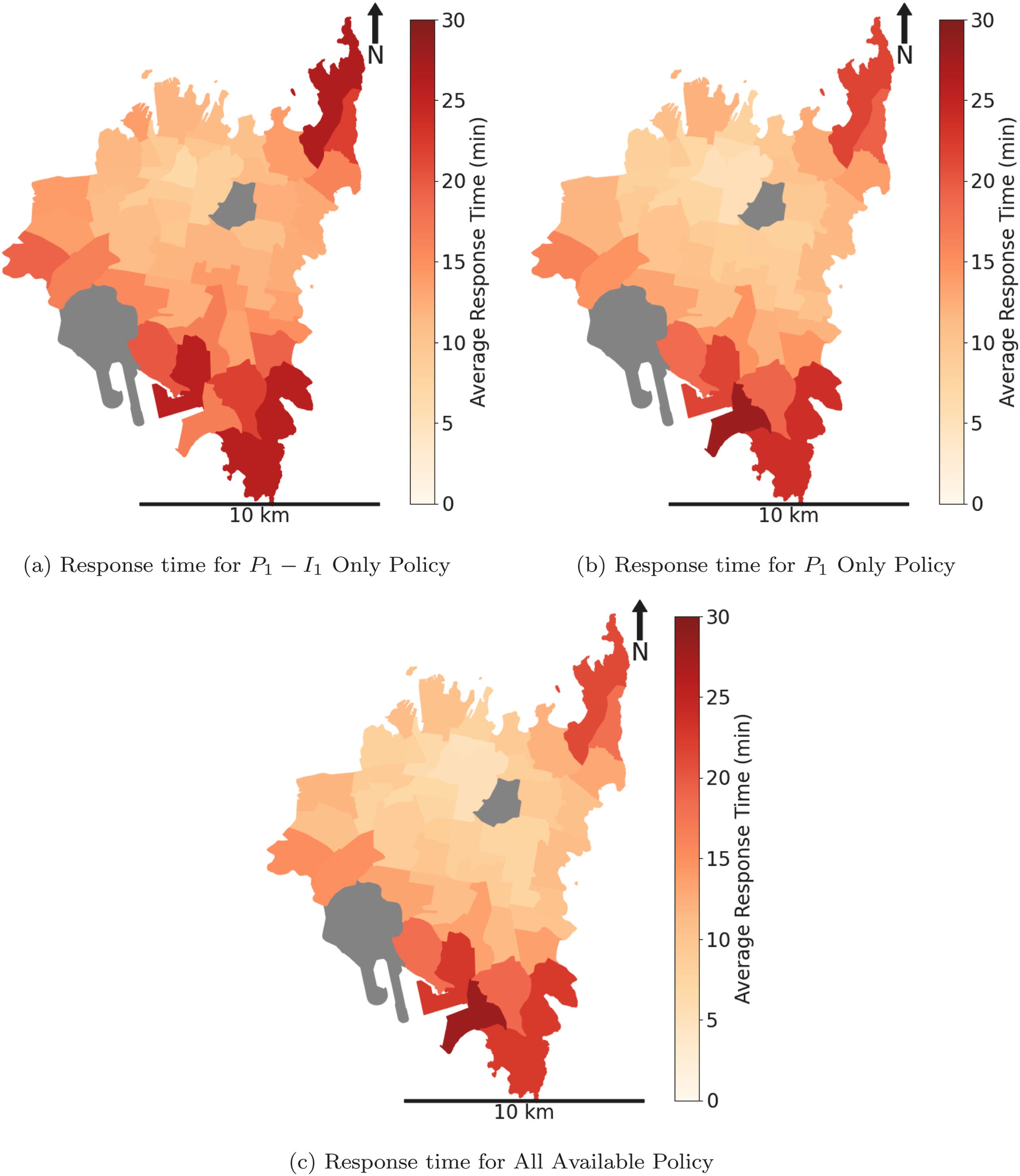
Efficient dispatch policies are critical for ensuring equitable and effective emergency medical services (EMS). While vehicle specialisation offers tangible clinical benefits, integrating vehicle types into dispatch policy presents significant challenges. This study employs an agent-based simulation framework to evaluate the effects of alternative dispatch policies under varying proportions of specialised ambulances. Results indicate that allowing specialised vehicles to respond to a broader range of high-priority incidents enhances overall survival rates. However, the benefits of specialisation depend on how these vehicles are deployed within the system. When the supply of specialised vehicles exceeds demand, restrictive policies lead to longer response times and worsened outcomes for non-prioritised cases. In particular, restricting specialised vehicles to a narrow set of incidents can reduce overall system efficiency by limiting dispatch flexibility and increasing waiting times for other patients. Moderately flexible dispatch policies provide balance between outcome efficiency and response equity. These findings suggest that both the proportion of specialised vehicles and their dispatch eligibility should reflect the underlying mix of incidents in order to avoid over-constraining the system. Spatial analysis shows that survival and response disparities are more pronounced in peripheral areas. These findings underscore the need to align dispatch policy and fleet composition with incident typology and spatial demand, offering actionable insights for EMS policy and resource planning.
Keywords:
Dispatching policy, Emergency medical services, Agent-based simulation, Vehicle classes, Incident types, Priority